
The foreign minister acknowledged that he spoke with Hurriyat leader Mirwaiz and India should not make it an issue.

India is willing to hold a sustained dialogue with Pakistan if Islamabad gives an assurance that its soil will not be used to direct terrorist attacks and foment anti-India feelings, External Affairs Minister S M Krishna said on Thursday.Replying to supplementaries during the Question Hour in Rajya Sabha, Krishna said there had been uninterrupted dialogue from 2004 till the Mumbai terrorist attack in November 2008.

Pakistan Army said on Thursday that it has 'nothing to do with politics' and it will remain apolitical in the future as well, as the powerful institution asserted that its chief General Qamar Javed Bajwa was not seeking an extension and will neither accept one.
Even as the Inter State Intelligence stands completely exposed in the eyes of the public for its terror links, in particular those against India, the Obama Administration has argued that New Delhi should continue its dialogue process with Islamabad.
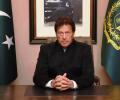
In his first comments since the militaries of India and Pakistan jointly announced on Thursday that they have agreed to strictly observe all agreements on the ceasefire along the Line of Control (LoC) and other sectors, Khan said Pakistan remains ready to move forward to resolve 'all outstanding issues' with India through dialogue.
Pakistan has reportedly entered into a civil nuclear deal with China for setting up two nuclear power stations of 640 megawatts in Chashma.
Khan said, "If India has evidence or actionable intelligence, they should give it to us and we will take action."

Pakistan Muslim League-Nawaz president and Leader of Opposition in National Assembly Shehbaz Sharif, 70, who is the Opposition's candidate for the new prime minister, will announce his possible government priorities after taking the oath.

There is growing acceptance of the idea in the international community that engaging the Taliban government is a far better approach than ostracising it, observes Ambassador M K Bhadrakumar.
The United States has once again rejected the notion regarding it playing a role of an 'intermediary' between India and Pakistan to help both nuclear powered countries to resolve long pending issues between them.

The external affairs minister reiterated India's position on Afghanistan and highlighted its humanitarian support to the war-torn country, including the supply of wheat, medicines, vaccines and clothing.
India and Pakistan will on Tuesday discuss financing of the $4.1-billion Iran-Pakistan-India gas pipeline project, the transit fee that Islamabad will charge for allowing the passage of the pipeline to India and security issues.

Pakistan Prime Minister Imran Khan said on Tuesday that he would like to have a TV debate with his Indian counterpart Narendra Modi to resolve differences between the two neighbouring countries.
National security advisers of India and Pakistan are expected to meet in October to follow up on the meeting between Prime Minister Manmohan Singh and President Gen Pervez Musharraf in New York.
The United States continues to negotiate with Pakistan on re-opening of the crucial NATO supply routes to Afghanistan that were closed by Islamabad after a cross-border NATO air strike killed 24 of its soldiers last year, the State Department said on Wednesday.

Sharif also expressed optimism that India-Pakistan ties would improve in the days ahead.
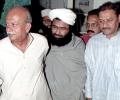
'The Pakistani move to ban militant outfits and placate international opinion and Islamabad's openness to a UN security council resolution on Azhar -- instead of beseeching China to cast yet another veto -- enables Islamabad to occupy the high ground,' notes Ambassador M K Bhadrakumar.
Two top United States security officials are traveling to Pakistan on Tuesday to meet the country's civil and military leadership and press for more aggressive action against Al Qaeda-allied groups. Central Intelligence Agency Director Leon Panetta and the National Security Advisor General James Jones, who are embarking on a visit to Islamabad, will meet President Asif Ali Zardari, Prime Minister Yousuf Raza Gillani, Army Chief General Ashfaq Kiyani.
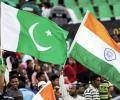
India and Pakistan in a surprise announcement said on February 25 that they have agreed to strictly observe all agreements on ceasefire along the Line of Control in Jammu and Kashmir and other sectors.
Pakistan on Friday made it clear that it would not accept any pre-condition for resumption of the stalled peace process with India. Islamabad made its stand clear while reacting to Prime Minister Manmohan Singh's assertion that for the resumption of dialogue, Pakistan must meet the "minimum pre-condition" of ensuring that its soil will not be used for terror activities against India.
The Mumbai terror attacks, which were carried out by the Pakistan-based Lashkar-e-Tayiba terror outfit, closed the door for any Indo-Pak discussions on Kashmir, according to a top American diplomat.

Punjab Chief Minister Charanjit Singh Channi, along with his ministers, will be part of the first 'jatha' (group), which will visit the Kartarpur Sahib on Thursday, officials said.
Sinha said Islamabad needs to stop cross-border terrorism for an Indo-Pak dialogue to be resumed.
India's options are few. Can it drop its insistence on taking the 26/11 file to its bitter end? No elected government in New Delhi can adopt a policy of 'kiss-and-make-up' on the 26/11 file, given the public mood in the country regarding the horrendous nature of the crime that the ISI perpetrated.

Pakistan's ISI chief Lt Gen Nadeem Ahmed Anjum said on Thursday that Army chief Gen Qamar Javed Bajwa was given a "lucrative offer" in March by the then government amidst the political turmoil, as the powerful top spy launched a veiled attack on ousted premier Imran Khan at an unprecedented press conference.
Pakistan plans to flood Kashmir with suicide squads mainly drawn from renamed Lashker-e-Tayiba in case the ongoing peace initiatives with India fail, a US-based Pakistani web newspaper reports.
The United States and Pakistan would hold their third ministerial-level Strategic Dialogue in Washington, DC, next week, against the backdrop of America pushing Islamabad to act firmly against terrorist safe havens and step up relief efforts in the wake of the devastating floods in the country
Rediff.com takes a look at how the ice between the two estranged neighbours melted after months of diplomatic and political antagonism.
Asked whether the frozen peace process would restart as the NAM summit at Havana was around the corner, Singh replied that it was too early to say if it would happen.

India has given a clear indication that killing of its five soldiers on LoC by Pakistan Army will delay the Indo-Pak Secretary-level talks, asserting that dialogue can only proceed in an environment free of violence and terror.
Speaking in parliament during the budget session, Khan said the American forces entered Pakistan and killed Laden without informing Islamabad after which everyone started abusing his country.
Aziz stressed that Pakistan was committed to a peaceful settlement of the Kashmir problem with India as per the 'wishes and aspirations' of Kashmiris.

FO spokesman Mohammad Faisal said that "Pakistan takes exception to the factually incorrect statement issued by US State Department on today's phone call between Prime Minister Khan and Secretary Pompeo".
Last week, Pakistan and Iran had signed a memorandum of understanding for the implementation of the 2600-km project.
Islamabad is being bluntly asked not to use the development in Kashmir for cross border terrorism or infiltration across the Line of Control.

'The last thing he would want is new tensions with India.'
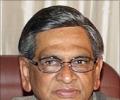
Indian External Affairs Minister S M Krishna has asserted that the main agenda of his meeting his Pakistani counterpart Shah Mehmood Qureshi in New York would be to pressurise Islamabad in taking action against perpetrators of the Mumbai terror attack.
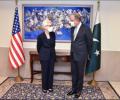
Russia and China are tight-fisted and Iran is broke and none of them has the political will or capacity to bankroll the Afghan economy, which only the US can, points out Ambassador M K Bhadrakumar.
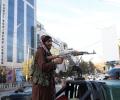
Delhi has come to accept the Taliban takeover in Kabul as a reality and seems increasingly unsure of its dogmatic view of the Taliban as a mere proxy of the Pakistani military and security establishment, observes Ambassador M K Bhadrakumar.

The Pakistan army is staring at the greatest, scariest, existential threat to its power in their country. This threat has come from a populist riding democratic power, observes Shekhar Gupta.
